



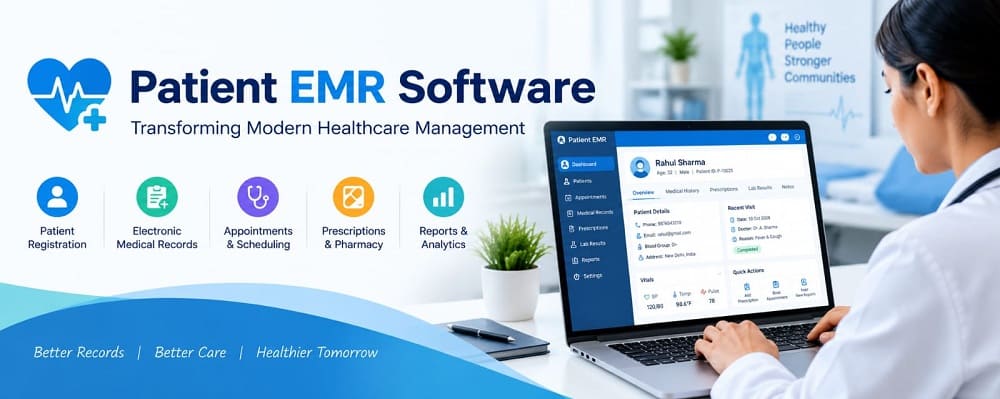
Patient EMR Software: Transforming Modern Healthcare Management
The healthcare industry is rapidly embracing digital technology to improve patient care, streamline hospital operations, and maintain accurate medical records. Patient EMR Software has become an essential solution for hospitals, clinics, diagnostic centres, and other healthcare facilities seeking to manage patient information efficiently. By replacing traditional paper-based records with digital documentation, EMR software helps healthcare professionals access important medical information quickly and deliver better patient care.
What Is Patient EMR Software?
Patient EMR (Electronic Medical Records) Software is a digital system designed to store, manage, and retrieve patients' medical information. It maintains essential details such as medical history, diagnoses, prescriptions, allergies, laboratory reports, treatment plans, and consultation notes in a centralized digital format.
With a reliable EMR system, doctors and healthcare staff can access relevant patient records whenever needed, subject to appropriate access permissions. This improves coordination between departments and supports informed clinical decision-making.
Key Features of Patient EMR Software
Modern Patient EMR Software offers several features that simplify everyday healthcare activities.
1. Digital Patient Records: Maintain comprehensive patient profiles, including personal information, medical history, diagnoses, and previous consultations.
2. Appointment and Consultation Management: Organize patient appointments, record consultation details, and help doctors manage their daily schedules efficiently.
3. Prescription Management: Create digital prescriptions, document medications, and maintain a record of prescribed treatments to reduce documentation errors.
4. Laboratory and Diagnostic Integration: Access laboratory results, diagnostic reports, and other relevant clinical information from a centralized system when integrations are available.
5. Patient History Tracking: Review previous illnesses, treatments, allergies, and follow-up notes to support continuity of care.
6. Data Security and Access Control: Protect confidential patient information through role-based permissions, secure authentication, audit trails, and appropriate backup procedures.
Benefits of Using Patient EMR Software
Implementing Patient EMR Software offers significant advantages for healthcare organizations. First, it reduces paperwork and minimizes the time spent searching for physical patient files. Doctors can retrieve relevant information more quickly, allowing them to focus more on patient consultations.
Second, digital documentation improves the organization and legibility of medical records. It can also help reduce errors associated with handwritten notes and misplaced documents.
Third, EMR software supports better coordination among doctors, nurses, and other authorized healthcare professionals. Access to updated patient information helps healthcare teams understand previous treatments and plan appropriate follow-up care.
Additionally, digital records can support reporting, operational analysis, and regulatory documentation when configured to meet applicable requirements.
How to Choose the Best Patient EMR Software
Healthcare providers should consider several factors before selecting an EMR solution. Look for a user-friendly interface, customizable clinical templates, reliable technical support, secure data storage, and compatibility with existing hospital systems.
Integration with Hospital Management Software can provide additional benefits by connecting patient records with appointments, billing, pharmacy, laboratory, and other hospital operations. Healthcare organizations should also evaluate data migration options, backup policies, access controls, and compliance with applicable data protection requirements.
Conclusion
Patient EMR Software is an important investment for healthcare organizations looking to modernize clinical documentation and improve operational efficiency. By providing organized digital patient records, supporting clinical workflows, and enabling secure access to medical information, EMR solutions help healthcare professionals deliver more coordinated and informed care.
Choosing the right software can help hospitals and clinics reduce paperwork, improve record accessibility, and build a more efficient healthcare environment. As digital healthcare continues to evolve, Patient EMR Software will remain a valuable tool for delivering patient-focused services and supporting the future of healthcare management.
Latest Blog
- Patient EMR Software: Transforming Modern Healthcare Management
- Blood Bank Software: Streamlining Modern Blood Bank Management
- Healthcare Software Company: Transforming Modern Healthcare with Smart Digital Solutions
- Dialysis Software: Transforming Dialysis Center Management
- Hospital Management Software: The Future of Digital Healthcare
- Patient EMR Software: Streamlining Modern Healthcare with Digital Patient Records
- Pathology Software and Ophthalmology Software: Transforming Modern Healthcare
- Hospital Management System & Hospital Management Software: Transforming Modern Healthcare
- Hospital Management System: The Smart Solution for Modern Healthcare
- Hospital Management Software: The Smart Solution for Modern Healthcare
- Healthcare Software Company: Transforming the Future of Healthcare Management
- Hospital Management System: Transforming Healthcare with Smart Digital Solutions
- Hospital Software: Transforming Healthcare Management in the Digital Age
- Blood Bank Software: Transforming Modern Blood Bank Management
- Eye Hospital Management Software: A Smart Solution for Modern Eye Care
- Why Every Healthcare Facility Needs a Hospital Management System
- Veterinary Software: Revolutionizing Modern Veterinary Practice
- Blood Bank Software: Transforming Blood Management with Smart Technology
- Healthcare Software Company – Transforming Healthcare Digitally with Sara Technologies
- Hospital Software: Transforming Healthcare with the Best Hospital Software Solutions