




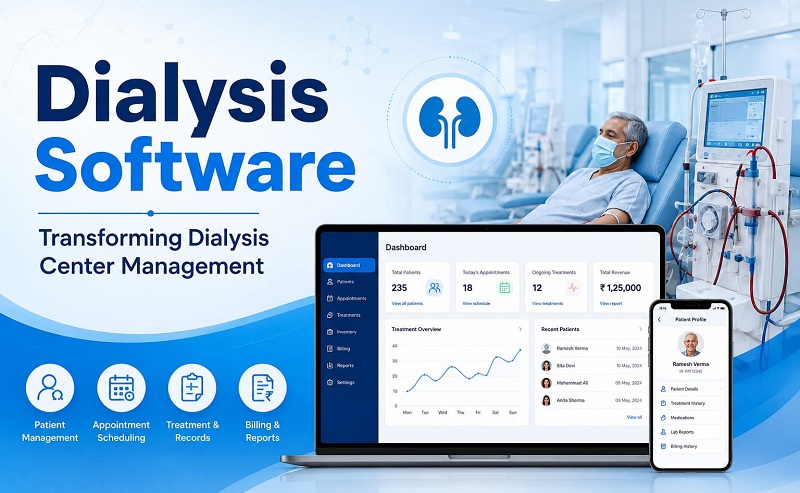
Dialysis Software: Transforming Dialysis Center Management
The healthcare industry is rapidly adopting digital solutions to improve patient care, reduce administrative workload, and manage medical records efficiently. For dialysis centers and hospitals, Dialysis Software has become an important technology for streamlining day-to-day operations and maintaining accurate patient information.
Dialysis treatment involves regular appointments, detailed clinical records, machine monitoring, medication tracking, billing, and follow-up care. Managing all these activities manually can be time-consuming and may increase the possibility of errors. A dedicated dialysis management solution helps healthcare professionals manage these processes from a centralized platform.
What Is Dialysis Software?
Dialysis Software is a specialized healthcare management system designed to help dialysis centers efficiently manage patients, treatment schedules, clinical records, dialysis machines, billing, and other administrative activities.
It provides healthcare staff with quick access to important patient information and helps doctors and nurses maintain organized treatment records. By bringing multiple functions into one system, dialysis software can improve operational efficiency and support better coordination among healthcare teams.
Key Features of Dialysis Software
1. Patient Management
The software maintains comprehensive patient profiles, including demographic details, medical history, treatment information, and previous dialysis sessions. This allows authorized healthcare professionals to access relevant information quickly.
2. Dialysis Treatment Records
Healthcare professionals can record important details related to each dialysis session. Treatment information, observations, vitals, medications, and other clinical notes can be maintained digitally for future reference.
3. Appointment and Schedule Management
Dialysis patients often require regular treatment sessions. Software can help staff schedule appointments, allocate treatment slots, and manage recurring dialysis sessions efficiently.
4. Dialysis Machine Management
A dedicated system can help maintain information about dialysis machines, their usage, maintenance schedules, and availability. This can support better utilization of available equipment.
5. Billing and Payment Management
Dialysis Software can simplify billing by maintaining treatment charges, payments, outstanding balances, and invoices. This reduces manual paperwork and helps administrative teams maintain accurate financial records.
6. Doctor and Staff Management
The system can help manage doctors, nurses, technicians, and other staff members involved in dialysis services. Staff assignments and treatment-related responsibilities can be organized more efficiently.
7. Reports and Analytics
Healthcare administrators can generate reports related to patients, dialysis sessions, revenue, appointments, machine usage, and other operational activities. These reports can help management monitor the performance of the dialysis unit.
8. Digital Medical Records
Instead of maintaining multiple paper files, patient information can be stored digitally. This makes it easier for authorized staff to retrieve historical treatment information whenever required.
Benefits of Dialysis Software
Implementing Dialysis Software can provide several benefits to dialysis centers and hospitals:
- Reduces paperwork and repetitive administrative tasks
- Improves organization of patient records
- Makes treatment information easier to access
- Simplifies appointment scheduling
- Helps manage dialysis sessions efficiently
- Supports accurate billing and payment tracking
- Improves coordination between healthcare staff
- Provides useful management reports
- Helps reduce manual data-entry errors
- Supports better overall workflow management
Why Dialysis Centers Need Digital Management
Dialysis centers handle patients who may require treatment several times each week. Because of the repetitive and highly organized nature of dialysis care, efficient scheduling and accurate record management are essential.
A digital system can provide a centralized view of patient appointments, treatment history, billing information, and operational data. This allows staff to spend less time handling paperwork and more time focusing on patient care.
Choosing the Right Dialysis Software
Before selecting a dialysis management solution, healthcare organizations should consider factors such as ease of use, scalability, security, reporting capabilities, patient management, billing functionality, scheduling, and technical support.
The software should also be flexible enough to adapt to the specific workflow of the dialysis center. A user-friendly interface is particularly important because doctors, nurses, technicians, and administrative staff may all use the system for different purposes.
Conclusion
Dialysis Software is becoming an important digital solution for modern dialysis centers and hospitals. From patient registration and treatment records to appointment scheduling, machine management, billing, and reporting, it can bring multiple operational processes together in a single platform.
By reducing manual work and improving access to organized information, dialysis software can help healthcare organizations create a more efficient and coordinated dialysis management environment. As healthcare continues to embrace digital transformation, specialized software solutions will play an increasingly important role in modern dialysis center operations.
Latest Blog
- Blood Bank Software: Streamlining Modern Blood Bank Management
- Healthcare Software Company: Transforming Modern Healthcare with Smart Digital Solutions
- Dialysis Software: Transforming Dialysis Center Management
- Hospital Management Software: The Future of Digital Healthcare
- Patient EMR Software: Streamlining Modern Healthcare with Digital Patient Records
- Pathology Software and Ophthalmology Software: Transforming Modern Healthcare
- Hospital Management System & Hospital Management Software: Transforming Modern Healthcare
- Hospital Management System: The Smart Solution for Modern Healthcare
- Hospital Management Software: The Smart Solution for Modern Healthcare
- Healthcare Software Company: Transforming the Future of Healthcare Management
- Hospital Management System: Transforming Healthcare with Smart Digital Solutions
- Hospital Software: Transforming Healthcare Management in the Digital Age
- Blood Bank Software: Transforming Modern Blood Bank Management
- Eye Hospital Management Software: A Smart Solution for Modern Eye Care
- Why Every Healthcare Facility Needs a Hospital Management System
- Veterinary Software: Revolutionizing Modern Veterinary Practice
- Blood Bank Software: Transforming Blood Management with Smart Technology
- Healthcare Software Company – Transforming Healthcare Digitally with Sara Technologies
- Hospital Software: Transforming Healthcare with the Best Hospital Software Solutions
- Patient EMR Software: Redefining the Future of Digital Healthcare