




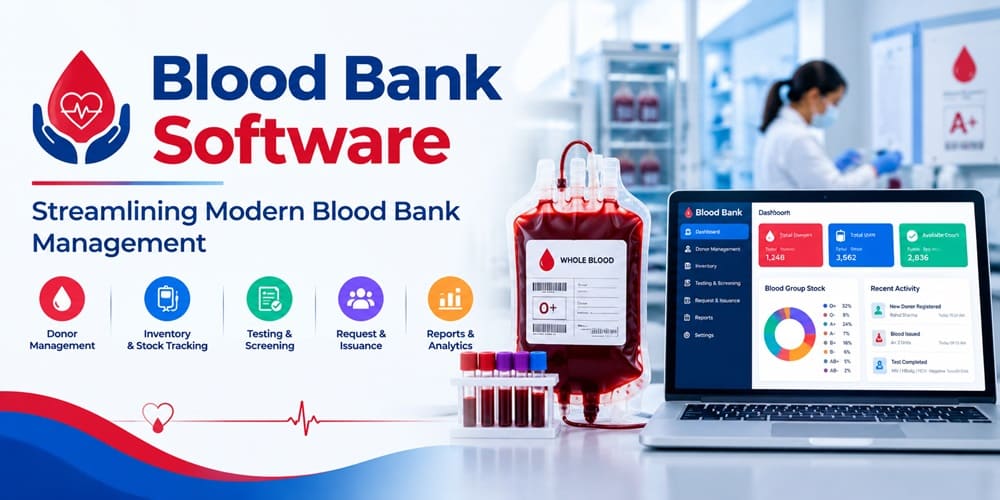
Blood Bank Software: Streamlining Modern Blood Bank Management
Managing a blood bank involves much more than collecting and storing blood. From donor registration and blood collection to testing, inventory management, and distribution, every process requires accuracy, efficiency, and proper documentation. Blood Bank Software provides healthcare organizations with a centralized digital solution to manage these activities efficiently while improving operational control and patient safety.
What Is Blood Bank Software?
Blood Bank Software is a specialized healthcare management system designed to automate and organize the complete blood bank workflow. It helps blood banks maintain digital records of donors, blood units, blood groups, testing results, stock levels, issue records, and transfusion-related information.
Instead of relying on manual registers and spreadsheets, staff can use a centralized platform to access updated information quickly and accurately.
Key Features of Blood Bank Software
A modern Blood Bank Software solution can include several features that simplify daily operations:
1. Donor Management
Maintain comprehensive donor profiles, including personal information, blood group, donation history, eligibility details, and contact information.
2. Blood Collection Management
Record blood collection details and associate every collected unit with the appropriate donor and collection date for better traceability.
3. Blood Inventory Management
Track available blood units according to blood group, component type, quantity, collection date, and expiry date. This helps staff monitor stock levels and reduce wastage.
4. Blood Testing Records
Maintain digital records of mandatory screening and testing results, helping staff organize information related to the safety and status of collected blood units.
5. Blood Issue and Distribution
Manage requests and blood unit issuance efficiently while maintaining records of where and when each unit was issued.
6. Alerts and Notifications
Automated alerts can help staff identify low-stock situations, approaching expiry dates, pending activities, and other important events.
Benefits of Blood Bank Software
Implementing Blood Bank Software can significantly improve operational efficiency. Digital records reduce paperwork and minimize the risk of errors caused by manual data entry. Staff can locate donor and inventory information quickly, saving valuable time during critical situations.
Real-time inventory visibility also helps blood banks understand which blood groups and components are available. Better tracking can support effective stock management and help reduce unnecessary wastage caused by expired units.
Another important benefit is *traceability*. Maintaining organized digital records allows authorized staff to track blood units throughout different stages of the blood bank workflow.
Why Choose a Reliable Blood Bank Software Solution?
Every blood bank has different operational requirements. Therefore, software should be scalable, user-friendly, secure, and capable of supporting the organization's workflow. A reliable solution should also provide appropriate access controls and maintain accurate records to support responsible healthcare data management.
Conclusion
As healthcare organizations continue to adopt digital technologies, Blood Bank Software has become an important tool for improving blood bank operations. From donor management and blood collection to inventory tracking and blood distribution, the right software can bring multiple processes together on one platform.
By replacing fragmented manual processes with organized digital management, blood banks can improve efficiency, strengthen traceability, and make better use of available resources while supporting safer and more responsive healthcare services.
Latest Blog
- Blood Bank Software: Streamlining Modern Blood Bank Management
- Healthcare Software Company: Transforming Modern Healthcare with Smart Digital Solutions
- Dialysis Software: Transforming Dialysis Center Management
- Hospital Management Software: The Future of Digital Healthcare
- Patient EMR Software: Streamlining Modern Healthcare with Digital Patient Records
- Pathology Software and Ophthalmology Software: Transforming Modern Healthcare
- Hospital Management System & Hospital Management Software: Transforming Modern Healthcare
- Hospital Management System: The Smart Solution for Modern Healthcare
- Hospital Management Software: The Smart Solution for Modern Healthcare
- Healthcare Software Company: Transforming the Future of Healthcare Management
- Hospital Management System: Transforming Healthcare with Smart Digital Solutions
- Hospital Software: Transforming Healthcare Management in the Digital Age
- Blood Bank Software: Transforming Modern Blood Bank Management
- Eye Hospital Management Software: A Smart Solution for Modern Eye Care
- Why Every Healthcare Facility Needs a Hospital Management System
- Veterinary Software: Revolutionizing Modern Veterinary Practice
- Blood Bank Software: Transforming Blood Management with Smart Technology
- Healthcare Software Company – Transforming Healthcare Digitally with Sara Technologies
- Hospital Software: Transforming Healthcare with the Best Hospital Software Solutions
- Patient EMR Software: Redefining the Future of Digital Healthcare