




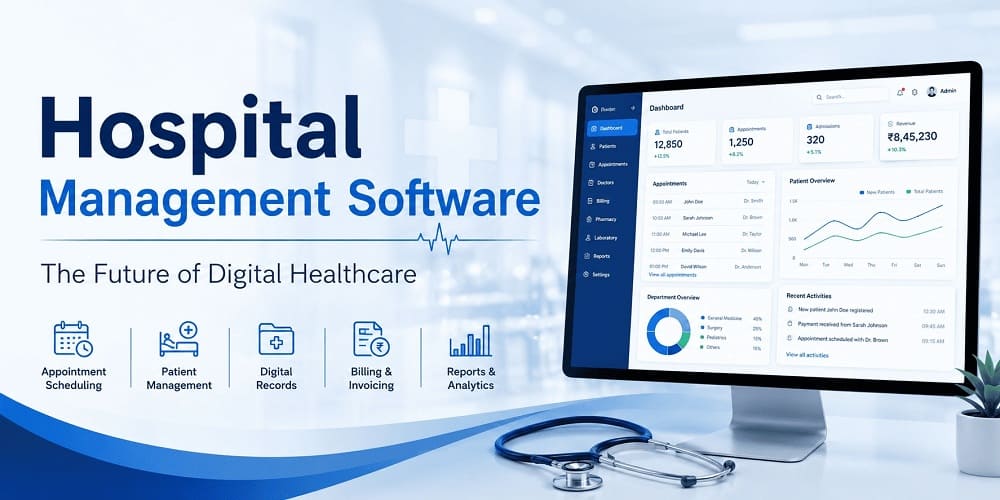
Hospital Management Software: The Future of Digital Healthcare
The healthcare industry is rapidly evolving, and hospitals are increasingly adopting digital solutions to improve operational efficiency, patient experience, and clinical workflows. Hospital Management Software has become an essential technology for hospitals, nursing homes, clinics, and healthcare organizations that want to manage their daily activities through a centralized digital platform.
From patient registration and appointment scheduling to billing, pharmacy, laboratory management, and electronic medical records, Hospital Management Software can bring multiple departments together and simplify complex healthcare operations.
What Is Hospital Management Software?
Hospital Management Software is a comprehensive healthcare technology solution designed to automate and manage various hospital activities from a single platform. Instead of maintaining separate paper records and manual registers, hospitals can use software to store, organize, retrieve, and manage important operational and patient-related information digitally.
A well-designed system can connect departments such as reception, OPD, IPD, laboratory, pharmacy, billing, accounts, nursing, and administration. This improves communication and allows authorized staff to access relevant information quickly.
Key Features of Hospital Management Software
Modern Hospital Management Software generally includes multiple modules to support different areas of hospital operations.
1. Patient Registration
The software can simplify patient registration by maintaining essential demographic and contact information digitally. Patient records can be searched quickly, reducing repetitive paperwork during subsequent visits.
2. Appointment Management
Appointment scheduling helps reception staff manage doctor availability, patient bookings, follow-ups, and consultation schedules. Automated appointment records can help reduce scheduling conflicts and improve patient flow.
3. OPD Management
OPD management allows hospitals to organize outpatient consultations, doctor notes, prescriptions, investigations, and follow-up information. Doctors and authorized staff can access relevant patient information during consultations.
4. IPD and Admission Management
For admitted patients, the system can manage admission details, room and bed allocation, treatment records, nursing information, discharge details, and other administrative requirements.
5. Electronic Medical Records
Electronic Medical Records help hospitals maintain patient information digitally. Medical history, consultation details, prescriptions, diagnostic reports, and other relevant information can be organized in a centralized system.
6. Laboratory Management
Laboratory modules can manage test requests, sample collection, test processing, result entry, and report generation. Integration between laboratory and hospital departments can improve information flow and reduce manual data entry.
7. Pharmacy Management
Pharmacy management features can help track medicines, stock levels, purchases, sales, expiry dates, and dispensing records. Better inventory visibility can help hospitals manage pharmaceutical supplies more effectively.
8. Billing and Accounts
Hospital billing software can manage consultation charges, diagnostic services, procedures, medicines, room charges, and other healthcare expenses. Automated billing can reduce calculation errors and simplify financial record management.
Benefits of Hospital Management Software
Implementing Hospital Management Software can provide significant benefits to healthcare organizations.
Improved efficiency: Automation reduces repetitive administrative work and allows employees to focus on essential responsibilities.
Centralized information: Patient and operational information can be managed through a unified platform, making information retrieval faster.
Reduced paperwork: Digital records reduce dependence on physical files and manual registers.Better coordination: Different departments can share relevant information through an integrated system.
Improved patient experience: Faster registration, appointment handling, billing, and report access can contribute to a smoother patient journey.
Better reporting: Management can generate reports related to patients, revenue, pharmacy inventory, laboratory activities, appointments, and other operations.
Why Hospitals Need Digital Management Solutions
Managing a modern hospital involves numerous departments, employees, patients, medical records, financial transactions, and inventory requirements. Manual systems can become difficult to manage as the organization grows.
Hospital Management Software provides a structured digital environment where different processes can be connected. This can help administrators monitor operations, identify workflow issues, and make informed decisions using organized data.
For multi-specialty hospitals, specialized modules can also support departments such as cardiology, ophthalmology, dentistry, gynecology, paediatrics, dialysis, and other clinical services.
Choosing the Right Hospital Management Software
Before selecting a software solution, hospitals should evaluate their specific operational requirements. Important factors include ease of use, scalability, customization, data security, reporting capabilities, integration options, technical support, and overall cost.
The software should be user-friendly enough for doctors, nurses, receptionists, pharmacists, laboratory staff, accountants, and administrators. It should also provide appropriate access controls so that users can access only the information required for their responsibilities.
Conclusion
Hospital Management Software is an important component of modern healthcare digital transformation. By integrating patient management, appointments, OPD, IPD, electronic medical records, laboratory, pharmacy, billing, inventory, and reporting, it can help healthcare organizations streamline operations and improve productivity.
As hospitals continue to embrace digital healthcare technologies, choosing a reliable and scalable Hospital Management Software solution can help create a more efficient, organized, and patient-focused healthcare environment.
Latest Blog
- Blood Bank Software: Streamlining Modern Blood Bank Management
- Healthcare Software Company: Transforming Modern Healthcare with Smart Digital Solutions
- Dialysis Software: Transforming Dialysis Center Management
- Hospital Management Software: The Future of Digital Healthcare
- Patient EMR Software: Streamlining Modern Healthcare with Digital Patient Records
- Pathology Software and Ophthalmology Software: Transforming Modern Healthcare
- Hospital Management System & Hospital Management Software: Transforming Modern Healthcare
- Hospital Management System: The Smart Solution for Modern Healthcare
- Hospital Management Software: The Smart Solution for Modern Healthcare
- Healthcare Software Company: Transforming the Future of Healthcare Management
- Hospital Management System: Transforming Healthcare with Smart Digital Solutions
- Hospital Software: Transforming Healthcare Management in the Digital Age
- Blood Bank Software: Transforming Modern Blood Bank Management
- Eye Hospital Management Software: A Smart Solution for Modern Eye Care
- Why Every Healthcare Facility Needs a Hospital Management System
- Veterinary Software: Revolutionizing Modern Veterinary Practice
- Blood Bank Software: Transforming Blood Management with Smart Technology
- Healthcare Software Company – Transforming Healthcare Digitally with Sara Technologies
- Hospital Software: Transforming Healthcare with the Best Hospital Software Solutions
- Patient EMR Software: Redefining the Future of Digital Healthcare